
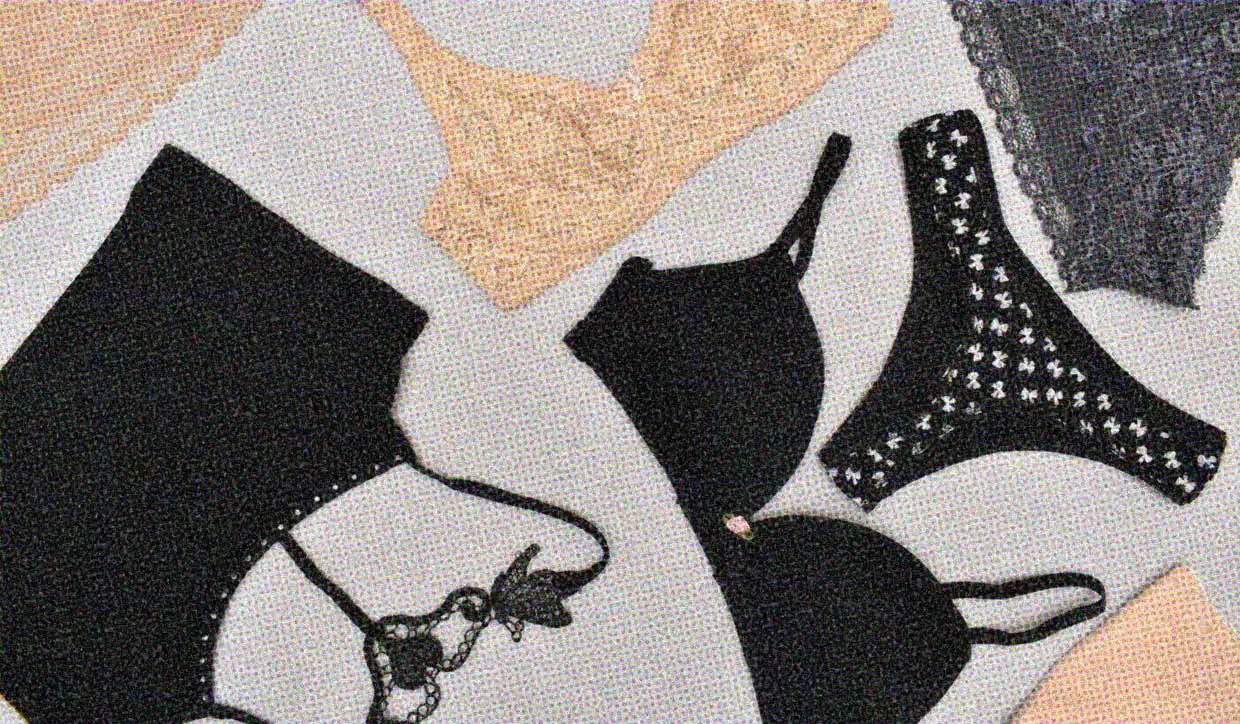

Why do little scraps of lace and silk make grown men weak in the knees? The story of lingerie starts somewhere far less sexy than you'd expect. Before the 20th century, women's underwear existed to reshape the body into whatever silhouette was fashionable that decade, which usually meant whalebone corsets doing something closer to engineering than dressing. It was the designer Lady Duff-Gordon, working under her label "Lucile", who pushed underwear toward something less restrictive around the turn of the 20th century, a shift that eventually led to Caresse Crosby's patent for the modern bra in 1914. What began as a rebellion against constriction slowly became its own aesthetic category, and by the middle of the century, lingerie had drifted from purely functional to something people wore to be looked at, or to feel a certain way in private.
That shift had an underground running alongside it. Yva Richard, founded in Paris just weeks before the First World War broke out, grew into a thriving mail-order fetishwear business by the late 1920s, producing corsetry and lingerie specifically for a clientele who understood it as fetish rather than fashion. Its main rival, Diana Slip Lingerie, commissioned photographers to document collections that had little interest in appearing in a department store catalogue. It's a useful reminder that lingerie as fetish isn't a modern invention layered onto an innocent garment; the two have been tangled together in the drawer for well over a century.
Part of the appeal is straightforwardly sensory. Lace, silk, and mesh all do something that plainer fabric doesn't. They reveal and conceal at the same time, which keeps the eye and the imagination working rather than settling. But the psychological layer is just as real as the material one. Consumer psychologist Kate Nightingale has argued that what we wear can influence how we think and feel, a concept often referred to as enclothed cognition. Lingerie can function almost like a costume change, where the associations you attach to a particular piece, confidence, boldness or softness, start to shape how you actually feel once you're wearing it. That's a big part of why lingerie sits so comfortably in fetish territory even for people who'd never describe themselves as "kinky". It's rarely just about how it looks to someone else. It's also about the shift it creates in the person wearing it, before anyone else is even in the room.
There's a ritual element too, one that doesn't get talked about as often as the visual side. Sex researchers have long noted that anticipation and ritual can increase desire by encouraging mindfulness and shifting attention away from everyday distractions. Getting dressed in lingerie, choosing the pieces, taking the time with them, slows things down in a way that plain clothing doesn't ask for. For a lot of people, that anticipation is doing as much work as the lingerie itself.
A lingerie fetish also travels in a direction popular culture doesn't always make room for, at least not seriously or fairly. Men wearing lingerie is a well-documented and long-standing interest in its own right. Researchers studying cross-dressing and gender expression have found that motivations vary widely, from comfort and self-expression to identity exploration and erotic interest. Some men describe lingerie as a way of experiencing softness and intimacy outside traditional expectations of masculinity. Some therapists who work with clients on this connect the interest to the way gender identity develops early and never fully separates from the masculine and feminine influences a person absorbed growing up. Whatever the explanation, it's a reminder that lingerie as fetish isn't tied to one gender wearing it for another. Sometimes it's simply for the person wearing it.
Feminist scholars and fashion historians have long argued that lingerie advertising has often framed intimate apparel around pleasing a partner, even as modern brands increasingly market it as a form of self-expression. This is part of why lingerie sits in a fetish category rather than a purely fashion one. The fetish and the discomfort come from the same source: Lingerie is genuinely capable of being about self-expression, and it has also spent decades being sold as something else entirely. Knowing the difference, for yourself, is most of what turns it from a costume you feel watched in, into one you actually enjoy wearing.
Trying lingerie for the first time doesn't have to mean a grand reveal or stepping far outside your comfort zone. Start with something that makes you feel good, whether that's a lace bralette, silk boxers, stockings, a bodysuit, or a matching bra and panty set. If you're introducing lingerie into a relationship, think of it as an invitation rather than a performance. Talk about what feels exciting, what makes you feel confident, and what you'd both enjoy exploring. For men, that might mean experimenting with fabrics, cuts or styles that aren't traditionally marketed to them. For women, it might mean choosing pieces that prioritise comfort and confidence over trying to meet someone else's expectations. Like any fetish or intimate interest, the goal isn't to recreate what you've seen in films or advertising; it's to discover what feels authentic, playful, and sexy for you.
HUD App’s Bedroom™ feature lets you share your desires, interests, and boundaries as part of your profile, making it easier to connect with people who are looking for similar experiences. It takes some of the guesswork out of those early conversations and helps everyone start from a place of honesty.
A lingerie fetish is a sexual or psychological attraction to lingerie, including bras, corsets, stockings, bodysuits and lace garments. For some people, the attraction is visual, while others enjoy the textures, confidence, or anticipation lingerie creates. People of any gender or sexual orientation can have a lingerie fetish.
Lingerie often appeals because it combines physical sensation with psychology. Fabrics like lace, silk, and mesh can create visual contrast by revealing and concealing the body, while wearing lingerie can also boost confidence and encourage a more intentional, playful mindset. For many people, the attraction is as much about how lingerie makes them feel as how it looks.
Absolutely. Lingerie isn't just for women, and many men enjoy wearing it for comfort, confidence, self-expression, or as part of their intimate lives. Modern lingerie brands increasingly offer styles designed for different body types and gender expressions, and there's no "right" way to explore lingerie if it makes you feel good.
Read more
Desires
Fetish 101: Cuckolding
What makes someone aroused by their partner being with someone else? Here is the psychology, the history, and the practical side of cuckolding.